
When Painting Is No Longer Enough: A 3,600 Sq. Ft. James Hardie Siding Transformation in Westminster, Colorado

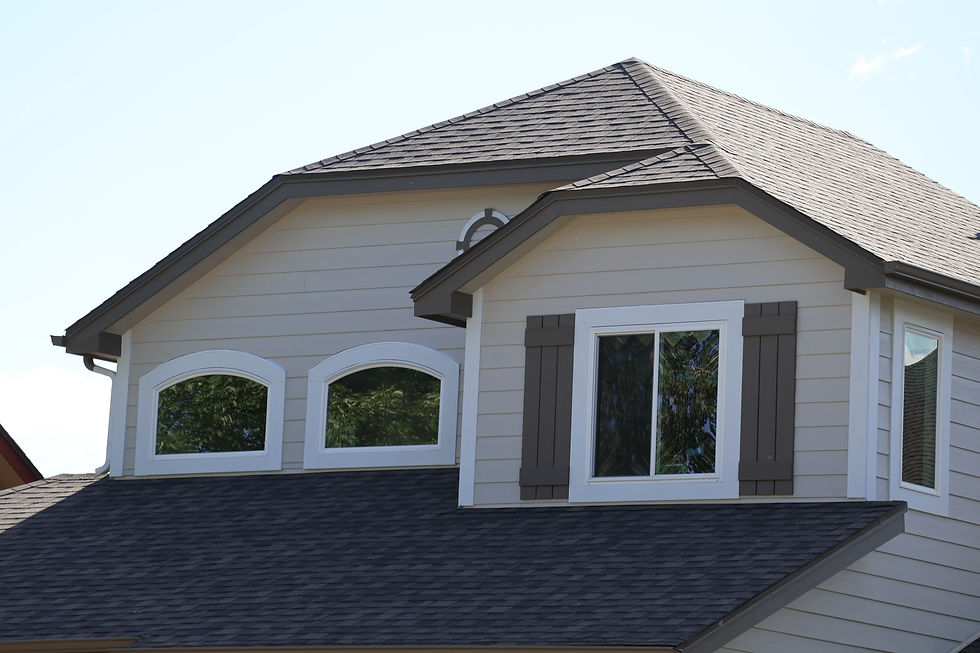
Sometimes a siding estimate starts with a very different conversation.
That was exactly the case with a recent project Remod Exteriors completed in Westminster, Colorado.
The homeowners originally contacted us hoping for some good news: could their existing siding make it through one more exterior paint cycle?
The home, built in the 1990s, still had its original wood-based siding and trim system.
Like many homes of this era throughout Westminster and the Denver metro area, the exterior had already been painted several times over its lifetime.
From a distance, another paint job might have seemed possible.
Up close, the condition told a very different story.
When Does Old Siding Need to Be Replaced Instead of Painted?
One of the first things we try to determine during an exterior inspection is whether we're dealing primarily with a coating problem or a substrate problem.
Paint can protect a sound substrate. It cannot restore siding that has physically deteriorated.
During our inspection, we found dozens of trim boards with significant deterioration. Some areas were completely rotted, and sections of trim were beginning to separate from the house.
The siding itself had become extremely dry and brittle. In numerous locations, the material was flaking, deteriorating and could practically crumble when touched.
Then there were the woodpeckers.
The homeowners had been dealing with ongoing woodpecker activity that was creating additional holes and damage in an exterior that was already nearing the end of its service life.
At that point, applying another expensive coating over the existing siding wasn't a solution we could confidently recommend.
The conversation changed from:
"What paint should we use?"
to:
"If we're going to replace the siding, what should we replace it with?"
That is an entirely different decision.
The Homeowners Wanted to Do It Once — and Do It Right
These homeowners weren't preparing the house for sale.
They planned to remain in the home for years to come, which changed how we approached the project.
Their priorities were straightforward:
Long-term durability
Significantly reduced exterior maintenance
Better resistance to moisture and deterioration
A product that wouldn't appeal to woodpeckers
A high-quality factory finish
Protection from Colorado's extreme weather
Improved fire resistance
An exterior design that still complemented the architecture of their 1990s home
Colorado can be particularly demanding on exterior building materials.
A home along the Front Range can experience intense UV exposure, extreme summer heat, freezing temperatures, heavy snow, wind-driven rain, hail and dramatic temperature swings — sometimes within remarkably short periods of time.
The homeowners wanted an exterior that was designed for that environment.
After reviewing the available siding options, James Hardie® fiber cement siding became the clear choice for this project.
Why We Recommended James Hardie

There isn't one siding product that is right for every homeowner or every house. Part of our job at Remod is explaining the tradeoffs between products rather than simply trying to sell one particular material.
For this home, however, James Hardie checked virtually every box.
Durability
Hardie® fiber cement products are specifically designed as a durable alternative to traditional wood-based exterior products.
Unlike the deteriorating material we were removing, fiber cement isn't a food source for pests and doesn't hold the same appeal for woodpeckers.
For homeowners who had already spent years repairing and repainting their existing exterior, that mattered.
Colorado Weather Performance
James Hardie manufactures its fiber cement products through its Engineered for Climate® approach, with products formulated for regional climate conditions.
For Colorado homeowners, durability through freezing temperatures, moisture, heat and severe weather is an important part of the siding decision.
Lower Maintenance
The homeowners didn't want to replace failing wood siding only to immediately begin another cycle of frequent exterior maintenance.
Fiber cement still requires normal homeowner care and inspection, but it eliminates many of the maintenance concerns associated with aging wood-based siding.
ColorPlus® Technology
We selected James Hardie ColorPlus® Technology, meaning the siding arrived from the factory with its finish already applied.
Rather than field-painting thousands of square feet of new siding, ColorPlus uses a controlled factory finishing process designed to provide consistent coverage, adhesion and long-term color performance.

The result is a finished exterior designed to resist fading, chipping, cracking and peeling while reducing the maintenance associated with a traditional field-painted exterior.
Warranty Protection
Hardie fiber cement siding products carry a 30-year non-prorated limited substrate warranty, while ColorPlus Technology finishes carry separate long-term finish protection.
For homeowners planning to stay in their house for many years, that combination of durability and warranty coverage made considerably more sense than putting another coat of paint over siding that had already reached the end of its useful life.
Another Growing Consideration in Colorado: Wildfire-Resistant Construction
There is another reason we're having more conversations about exterior materials with Colorado homeowners: wildfire resiliency.

Following devastating Front Range wildfires, Colorado and a growing number of local jurisdictions have adopted or expanded requirements for ignition-resistant construction in designated Wildland-Urban Interface (WUI) areas.
Depending on the municipality, wildfire zone and scope of the project, replacing a substantial portion of an existing exterior can trigger additional requirements for siding, soffits, decks, fencing, landscaping and other components around the home.
For example, portions of Arvada are now subject to its Wildfire Resiliency Code. In applicable wildfire zones, siding replacement affecting more than 25% of the exterior can trigger wildfire-resilient construction requirements.
Boulder County also has ignition-resistant construction requirements across its designated wildfire zones, including requirements that can apply when 25% or more of an existing building's exterior wall surface is replaced.
The Town of Superior has implemented the Colorado Wildfire Resiliency Code in mapped WUI areas, including provisions applicable to significant alterations affecting more than 25% of a structure's exterior.
Louisville has also adopted fire-hardening requirements, while Lafayette adopted the Colorado Wildfire Resiliency Code in 2026 for applicable mapped wildfire-risk areas.
The exact requirements vary considerably by jurisdiction and property location, so homeowners should not assume that every Denver-area home is subject to the same rules. Remod reviews applicable permitting and exterior requirements as part of planning a siding replacement.
This is another area where James Hardie fiber cement has become an attractive option.
Hardie siding complies with ASTM E136 as a noncombustible cladding, providing an important advantage for homeowners considering wildfire-resistant exterior materials.
Even when a particular home isn't required by code to use an ignition-resistant exterior, many Colorado homeowners are beginning to consider fire performance when making a siding investment they expect to keep for decades.
Designing the New Exterior
Once the homeowners decided to move forward, we began transitioning from product selection into project planning.
One of our first steps was introducing them to our professional color consultant.
Replacing approximately 3,600 square feet of siding creates an opportunity to completely redefine a home's exterior, but choosing colors from small samples can be difficult. Instead of asking our homeowners to make that decision alone, our color consultation process helps evaluate the home's architecture, roof, masonry, surrounding environment and existing elements to create a coordinated exterior palette.
For this Westminster home, the final combination was:
James Hardie ColorPlus Cobblestone horizontal lap siding
paired with
Arctic White Hardie trim around the windows, doors and outside corners
and finished with
Timber Bark fascia.
The Cobblestone provided a warm, understated body color while Arctic White created crisp definition around the home's architectural features. Timber Bark along the roofline added contrast and helped visually anchor the finished color scheme.
Instead of simply replacing deteriorated siding, we were able to give the entire house a much more intentional exterior design.
Planning a 3,600 Sq. Ft. Siding Replacement
A project of this size requires significantly more coordination than simply having a crew arrive and begin removing siding.
Our target was to begin construction approximately four to six weeks after the homeowners made their decision to move forward.
During that period, Remod coordinated the color selections, material quantities, supplier logistics, permitting, dumpsters, crews and installation schedule.
Before ordering material, we also met with our supplier on-site to inspect the project and review material requirements.
A special thank-you goes to the team at Alside for their support throughout this project.

The final material order included approximately 3,600 square feet of James Hardie siding along with thousands of linear feet of Hardie trim and associated exterior components.
Material logistics mattered on a house of this size.
Rather than dropping everything in one giant stack in the driveway and expecting our crews to move it around the property by hand, the Alside team helped coordinate material placement at both the front and rear of the home.

That might sound like a small detail.
On a major siding project, it isn't.
Proper material staging reduces unnecessary handling, keeps the job site more organized and allows installation crews to spend their time installing rather than continuously transporting material around the property.
Permits Pulled. Dumpsters Delivered. Time to Start.
With material ready and permits in place, dumpsters were delivered and tear-off began.
This is always one of the most important stages of a siding replacement.
Until the old exterior comes off, nobody can see every condition underneath it.
We prepare homeowners for the possibility of deteriorated sheathing, framing damage, moisture problems or other hidden conditions that may need to be addressed before new siding can be installed.
Fortunately, this house gave us relatively few surprises.
We identified some framing that needed to be modified and rebuilt to properly support portions of the new soffit system, but otherwise the underlying structure was in good condition.
Once those areas were addressed, we could begin building the new exterior assembly.
What Goes Behind the Siding Matters Just as Much as the Siding
The finished siding gets all the attention.
The components underneath it are arguably more important.
After the old siding was removed and the substrate inspected, our crews installed the new James Hardie weather-resistive barrier.

A properly installed weather-resistive barrier creates an important drainage plane behind the exterior cladding and helps manage water that gets behind the finished siding.
From there, the new Hardie siding installation began.
Cobblestone lap siding started transforming the large exterior elevations while Arctic
White trim established clean lines around windows, doors and corners.
The deteriorated exterior we had inspected only weeks earlier was disappearing.
Daily Project Oversight From Remod
One thing we believe homeowners should expect on a major exterior renovation is communication.
A siding project of this size affects your entire house. There are dumpsters, materials, crews, ladders, noise and dozens of individual installation details happening simultaneously.
Homeowners shouldn't have to wonder what's going on.
Throughout the project, Remod was on-site daily inspecting installation progress, taking photographs, reviewing details with the crews and providing homeowners with updates about where the project stood and what was coming next.
We don't believe project management means simply scheduling a crew and returning when the work is finished.
Our responsibility is to remain involved throughout construction.
That includes checking installation details, answering questions, documenting progress and identifying issues while they are still easy to address.
The Finishing Details
After a couple of weeks, the siding installation was nearing completion.
At that stage, we began coordinating the final trades.
New gutters were scheduled for installation, and Remod's painting crews arrived to complete the remaining exterior finishes.
Those finishing details included painting the:
Entry doors
Garage doors
Gutters and downspouts
Shutters
Front elevation accent areas
This is where the entire design came together.
The Cobblestone siding established the primary color.
Arctic White trim highlighted the windows, doors and corners.
Timber Bark fascia added depth at the roofline.
The painted architectural elements then tied the complete exterior together.
One Final Detail
Several weeks after the primary exterior project was complete, Remod returned to the home for one final improvement: a new storm door.
It was a relatively small project compared with replacing 3,600 square feet of siding, but it was the finishing touch.
The ribbon on the house.
From a Painting Estimate to Decades of Protection
This project started because homeowners wanted to know whether their existing siding could survive another paint job.
Sometimes the best answer we can give a homeowner isn't the least expensive answer.
It's the answer that makes sense for the condition of the home and what they're trying to accomplish.
In this case, the siding had done its job for decades.
But deteriorated trim, brittle siding, repeated paint cycles and continuing woodpecker damage were all telling the same story.
It was time.
Instead of investing more money into temporarily extending the life of a failing exterior, these Westminster homeowners chose to rebuild it with a system designed to serve their home for decades to come.
Approximately 3,600 square feet of new James Hardie ColorPlus siding.
Thousands of linear feet of new trim.
New weather protection.
New soffits.
New fascia.
New gutters.
A professionally coordinated color palette.
And, most importantly, an exterior the homeowners shouldn't have to worry about every time Colorado throws another blizzard, heat wave or summer thunderstorm at it.
For us, that's what a successful siding project looks like.
Another Colorado home protected. Another Remod project complete.
Considering Siding Replacement in Westminster or the Denver Metro?
If your siding is cracking, rotting, swelling, flaking, attracting woodpeckers or requiring increasingly frequent repairs and repainting, it may be worth determining whether another paint cycle still makes sense.
Remod Exteriors provides exterior siding inspections and replacement options throughout Westminster and the surrounding Denver metro area, including James
Hardie fiber cement and other modern siding systems.
Our goal isn't to automatically tell homeowners they need new siding.
It's to inspect what is there, explain what we're seeing, and help determine whether repair, painting or replacement makes the most sense for the home and the homeowner's long-term plans.

Comments